


Balgowlah Heights has a new claim to fame as local favourite Millin’s Free Range Butcher brought home two prestigious first-place trophies from the NSW Sausage King awards.
Millin’s Free Range Butcher claimed top honour for their Thick Beef Sausages in the Traditional Australian Beef Sausage category. Photo Credit: Millin’s Free Range Butcher
The New Street West shop’s declaration that “the bangers are better at Balgowlah Heights” was proven true when they claimed top honours in both the Traditional Australian Beef Sausage category and the Poultry Sausage division with their satay Malay chicken sausages.
Their Chicken Satay Malay Sausages were also awarded the top honour in the Poultry Sausage division. Photo Credit: Millin’s Free Range Butcher
For the tight-knit Balgowlah Heights community, the wins represent more than just recognition of quality meat products – they highlight the suburb’s growing reputation for artisanal food offerings.
Owner Stef Millin, a familiar face to locals who frequent the New Street West shopping precinct, accepted the awards after 12 years of competition entries. The business also secured impressive second-place finishes for their Morroccan Lamb & Raisin Sausages and their beef, Spanish onion, carrot, and parsley burgers.
Their Morroccan Lamb & Raisin Sausages secured an impressive second-place finish for the Gourmet Lamb category. Photo Credit: Millin’s Free Range Butcher
The Balgowlah Heights shop has developed a dedicated following among northern beaches residents who appreciate the butchery’s commitment to sourcing premium grass-fed meats from the Barrington Tops and Hunter Valley regions, as well as lamb and pork from Cowra.
Millin’s has become a cornerstone business in the Balgowlah Heights shopping strip, with their focus on quality ingredients and innovative flavour combinations making them a destination butcher for discerning local customers.
The awards add to Millin’s previous accolades, including several state awards and a national title for Best Butchers’ Beef Burger in 2019, further establishing Balgowlah Heights as a food lover’s destination on Sydney’s northern beaches.
A 20-year-old Balgowlah Heights resident is contesting multiple animal cruelty charges after allegedly deliberately running over kangaroos with a utility vehicle near Lithgow last July.
Leo Boland has pleaded not guilty to charges including torturing, beating and seriously injuring an animal; recklessly beating and seriously injuring an animal; and failing to disclose the identity of a driver or passenger as required.
Court documents reveal the disturbing allegations stem from a July 19 incident approximately 60 kilometres north of Lithgow, where Boland allegedly used a Holden Colorado ute to chase down and deliberately strike multiple kangaroos, including a joey. Police further allege that one kangaroo’s body was mutilated following the incident.
The case has direct connections to the northern beaches area, with the investigation led by local police after the incriminating Snapchat video came to their attention in September. Boland was subsequently charged on October 18.
In Manly Local Court on Wednesday, the police prosecutor stated that authorities had seized a mobile phone belonging to an unidentified passenger in the vehicle. When questioned on October 4, Boland allegedly refused to reveal the passenger’s identity.
While Boland was absent from Wednesday’s court proceedings at Manly Local Court, Magistrate Daniel Reiss scheduled an August 21 hearing expected to last between three and four hours.
The charges facing the Balgowlah Heights resident are serious, with police documents alleging he caused “prolonged suffering” to the animals and had “the intention of inflicting severe pain, committed a serious act of cruelty.”
Police have referred the death of Balgowlah toddler Joe Massa to the NSW Coroner and launched an investigation after allegations surfaced that Northern Beaches Hospital reportedly failed to provide life-saving treatment.
Elouise and Danny Massa took their son Joe to Northern Beaches Hospital’s emergency department on 14 September 2024 after he spent the night vomiting. The toddler had hypovolemia, a condition caused by severe fluid loss. Despite a dangerously high heart rate of 183 beats per minute, Joe was reportedly misclassified as a Category 3 patient instead of a more urgent Category 2.
His condition allegedly deteriorated over three and a half hours as his mother’s pleas for an IV drip were ignored. Joe suffered a fatal heart attack at 10:47 a.m. and later died at Sydney Children’s Hospital in Randwick due to brain damage.
Hospital Failures Revealed
A Serious Adverse Event Review (SAER), submitted to the NSW Health Ministry in December 2024, identified multiple failures in Joe’s treatment, including:
Failure to recognise and respond to a critically high heart rate.
Ignoring parental concerns about their child’s worsening condition.
Failure to act on internal escalation procedures.
Lack of an automatic alert system in the hospital’s patient IT system.
Two clinicians involved in Joe’s care were referred to the hospital’s executive unit for further management.
New developments have now escalated the matter.
Police and Coroner Step In
Following widespread media coverage and a NSW Parliamentary Inquiry into the incident on 27 February 2025, NSW Police announced they had retrospectively reported Joe Massa’s death to the NSW Coroner.
A police spokesperson confirmed on 28 February that Strike Force Carlton has been established to investigate the circumstances surrounding Joe’s death.
“Police have been directed by the NSW Coroner to investigate the death of a two-year-old boy from Sydney’s Northern Beaches in September last year,” NSW Police said in a statement.
Authorities also confirmed that the death had not been initially reported to police.
“More Fluids?”
During a NSW Parliamentary Inquiry on 27 February, Northern Beaches Hospital’s Chief Medical Officer, Peter Thomas, reportedly admitted that Joe Massa should have received fluids earlier.
“Retrospectively, it would’ve been appropriate to give baby Joe fluids earlier in his admission,” he told the enquiry.
The NSW Coroner’s findings and the police investigation may determine whether further action is taken against the hospital or medical staff.
Community and Political Response
Joe’s parents have called for a full public review of Northern Beaches Hospital’s emergency department and greater oversight of the public-private partnership (PPP) model that governs the facility.
NSW Health Minister Ryan Park admitted the hospital allegedly failed the Massa family. Official Chris Minns acknowledged the tragedy, stating that the government was open to further inquiries and potential policy changes.
Meanwhile, Dr Sophie Scamps, a former emergency doctor at Mona Vale Hospital, condemned the hospital’s PPP model, calling it a “failed experiment.” She launched a petition demanding the hospital be returned to public hands, which has already gathered over 1,500 signatures.
Caption: For Illustration Purposes Only Photo Credit: Pexels
Implementation of ‘Joe’s Rule’
In response to the tragedy, NSW officials will overhaul the existing “REACH” protocol, which allows families to escalate concerns about a patient’s deteriorating condition. The new system, to be renamed “Joe’s Rule,” aims to simplify the escalation process and ensure all families are aware of their rights.
The State have also committed the following:
Investigating Joe Massa’s case further through a coronial inquest.
Reviewing the Northern Beaches Hospital’s emergency department procedures.
Examining its contract with private hospital operator Healthscope.
Northern Beaches Hospital’s Controversial Public-Private Model
The Northern Beaches Hospital opened in 2018 under a PPP model. It replaced the public Manly and Mona Vale hospitals, a move that was widely opposed by residents. The state provides ongoing funding to private operator Healthscope, now owned by Canadian investment firm Brookfield.
A 2020 NSW Upper House inquiry into the hospital highlighted operational concerns and recommended ending all future PPP hospital arrangements in NSW. Five proposed regional hospital PPPs were scrapped as a result.
Public Outrage and Calls for Action
Many Northern Beaches residents have renewed calls for an entire public emergency department to be reinstated at Mona Vale Hospital. Former staff have reportedly raised concerns about chronic under-resourcing at Northern Beaches Hospital, with some nurses describing allegedly unsafe working conditions and staff shortages.
Patients have also allegedly experienced delays in emergency care, with some choosing to seek treatment at Royal North Shore Hospital instead.
What Happens Next?
The Massa family remains committed to seeking justice for their son. They continue to push for:
A full independent review into Northern Beaches Hospital’s emergency department.
Mandatory patient IT system upgrades to escalate critical cases automatically.
Legislation banning public hospitals from outsourcing operations to private companies.
Mr Minns stated that he would look into further investigations, and the NSW officials will soon hold a roundtable discussion on hospital reforms. The introduction of “Joe’s Rule” marks the first step towards ensuring no other family experiences a similar loss.
With the launch of Strike Force Carlton and the involvement of the NSW Coroner, the case has now entered a critical new phase of scrutiny.
A proposal to open a McDonald’s restaurant in Balgowlah has sparked debate among local residents, with some expressing strong opposition to the development, while the fast-food giant argues that the project will bring economic benefits to the area.
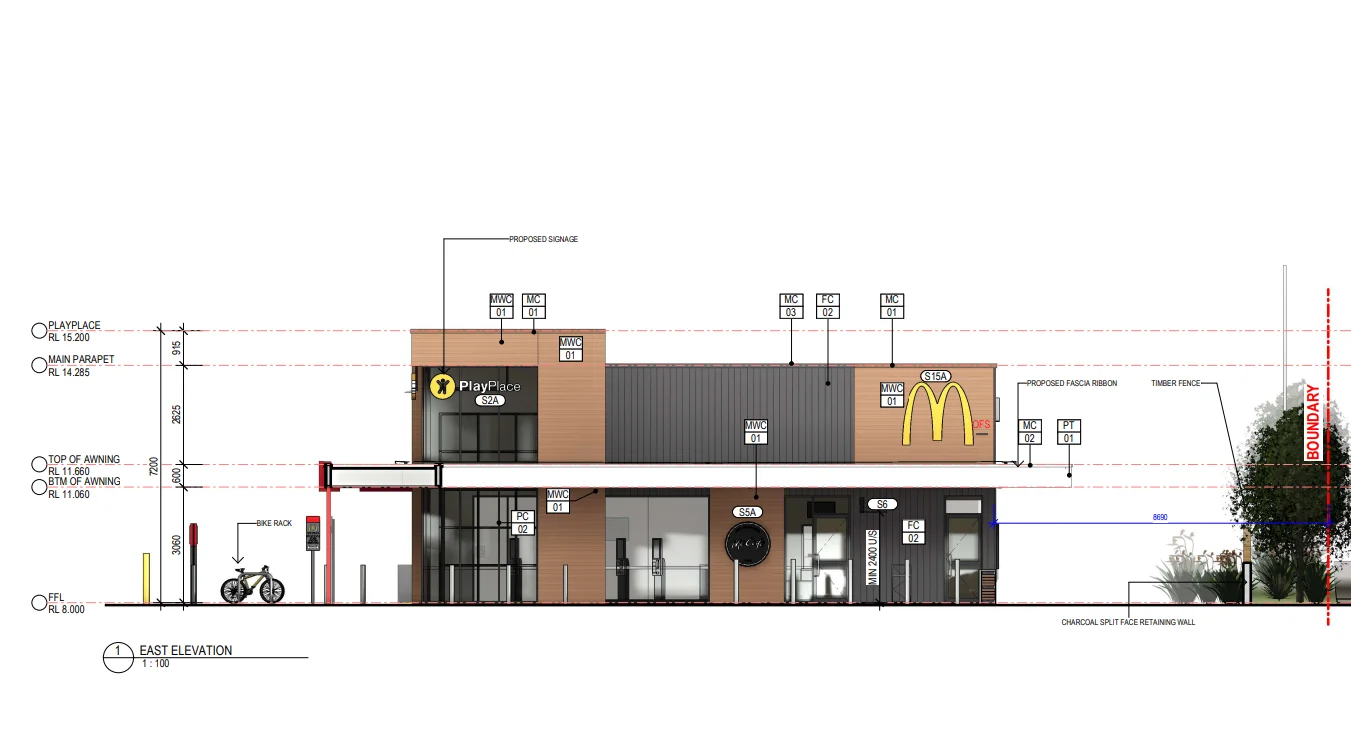
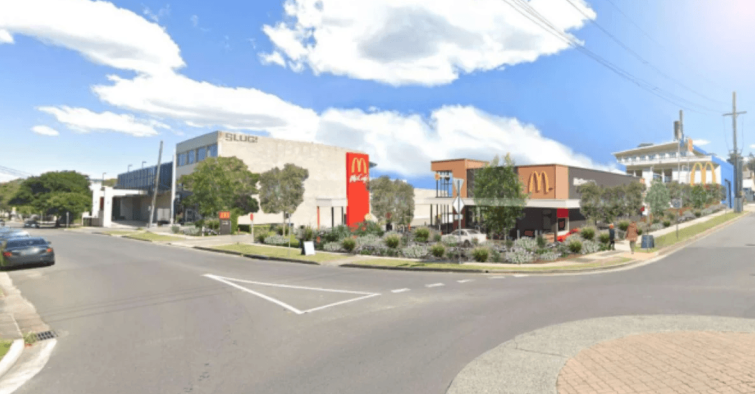
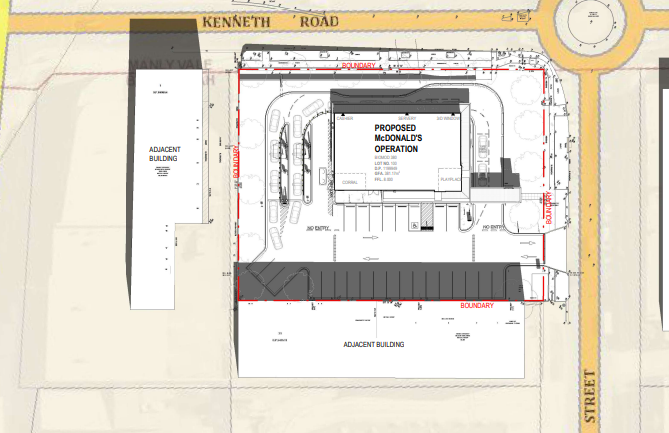
The Development Application (DA2025/0132), submitted to Northern Beaches Council earlier this month, outlines plans for a 24/7 McDonald’s at 37 Roseberry Street. The proposal includes a drive-thru with 15 car spaces and an additional 26-space car park. The site is currently occupied by Seven Miles Coffee, a well-established local business.
Community Concerns
Photo credit: Northern Beaches DA Tracker – DA2025/0132
Even before council notifications were formally issued, local opposition had gained traction, with concerned residents forming a Facebook group and launching a Change.org petition, which had gathered more than 1,500 signatures at the time of publication.
Opponents cite potential issues such as increased traffic congestion, noise pollution, and litter. Sarah, lead petitioner wrote on Change.org: “We face a pressing concern, as our neighborhood already hosts a KFC, which emits odour and litter, and contributes to traffic congestion at the intersection of Condamine Street and Kenneth Road.
“The addition of a new McDonald’ is unnecessary with another existing in the nearby suburb of Brookvale along with a Hungry Jacks. There is also another McDonalds and other fast food outlets at Warringhah Mall in Brookvale, 2km from the proposed development.”
Business and Economic Perspective
Photo credit: Seven Miles Coffee Roasters (Office & Roastery)/Google Maps
McDonald’s has stated that if the proposal is approved, the new location could generate over 100 jobs and contribute approximately $3.9 million in investment to the community. The company has also expressed its intention to support local initiatives and causes.
Nick Egan, CEO of Seven Miles Coffee Company, acknowledged the uncertainty surrounding the site, noting that while the business holds a long-term lease at Roseberry Street, it is also considering expansion opportunities within the Northern Beaches. He highlighted the significance of the local community to the company’s operations and values.
Traffic and Environmental Impact
37 Roseberry Street (Photo credit: Google Street View)
One of the major sticking points in the debate is traffic congestion. The DA’s traffic report acknowledged that the restaurant would have the greatest impact on weekday afternoons and Saturdays, coinciding with peak traffic periods. However, residents argue that the report does not sufficiently account for morning peak congestion.
Concerns about litter and odours have also been raised, with some residents worried about the cumulative effect of multiple fast-food outlets in the area. “Noise, traffic, litter, and everything that a 24-hour venue brings to a residential area are all reasons for McDonald’s to find a different location,” one community member commented.
Northern Beaches Council is currently reviewing the application, with formal consultation underway. The outcome remains uncertain, but what is clear is that the proposal has ignited strong opinions on both sides. As discussions continue, the debate over whether Balgowlah needs another fast-food outlet remains a hot topic within the community.
A Balgowlah Heights resident has been charged with serious animal cruelty offences after allegedly running over two kangaroos near Running Stream, sparking outrage and legal proceedings.
Leo Boland, 20, from Balgowlah Heights, faces multiple charges related to the alleged incident that occurred on July 19, approximately 60 kilometres north of Lithgow. The charges include torturing and seriously injuring animals, with police alleging he deliberately swerved his Holden Colorado ute to chase and run over two kangaroos, including a joey.
Boland did not appear in Manly Local Court on Wednesday, but his lawyer entered a not guilty plea on his behalf. The case has drawn attention to animal welfare issues in rural areas and the potential for deliberate animal cruelty.
According to police documents, the investigation began in September after CCTV footage emerged showing a vehicle allegedly deliberately running over kangaroos. Officers from the northern beaches command charged Boland on October 18, issuing a court attendance notice.
The most serious allegations include claims that Boland not only ran down the animals but also mutilated the body of one of the kangaroos. Police assert that he committed these acts “with the intention of inflicting severe pain” and causing “prolonged suffering” to the animals.
The matter is scheduled to return to Manly Local Court on February 5, where further details of the alleged incident are expected to be presented.
This case highlights the ongoing challenges of wildlife protection and the legal consequences of alleged animal cruelty in rural and semi-rural areas of New South Wales.
In the twilight of the 19th and dawn of the 20th centuries, Sydney’s Clontarf pleasure grounds were a hub of festivity, drawing crowds with their music, dancing, and merriment. Yet, in 1909 and 1910, a unique spectacle graced its shores—a Māori village alive with the rhythms and traditions of Aotearoa.
This cultural marvel was the brainchild of Makereti Papakura, affectionately known as Maggie. Born of Māori and English heritage, Papakura was a celebrated guide at the geothermal wonderland of Whakarewarewa, near Rotorua. Her fluency in English and grace as a hostess had charmed even royalty, including the Duke and Duchess of York and Cornwall during their 1901 visit.
Harnessing her cultural roots, Papakura assembled the Te Arawa troupe, a vibrant ensemble of dancers and singers from her native Whakarewarewa. The troupe’s 1909 debut in Sydney, complete with an intricately carved Māori village, was groundbreaking, marking the first cultural exchange on Australian soil.
The Clontarf picnic ground transformed into a living tableau of Māori life. Runanga, a grand meeting house, stood in the centre of the area, with huts, storehouses, and imposing war canoes on either side.
This microcosm of Aotearoa, enclosed by a traditional picket fence, captivated Sydney’s residents, whose fascination with Māori culture had been piqued by the All-Māori rugby league team’s recent tour.
Under the astute management of Charles Westmacott, a luminary of the Australian theatre scene, the Te Arawa troupe enthralled audiences with their dynamic performances. Haka dances, poi dances, and a blend of English and Māori songs resonated through the grounds. Electric lights, a novelty for the era, illuminated their night-time shows.
The Māori war canoes, a sight to behold, were not mere static displays. On one memorable occasion, the largest canoe embarked on a majestic journey from Clontarf to Cremorne Point, its paddlers navigating the harbour with remarkable skill.
The village wasn’t solely a stage for performances. It served as a poignant reminder of cultural practices. A traditional Māori funeral, or tangi, held for a deceased Māori footballer, moved onlookers with raw emotion and ritualistic beauty. The mournful cries echoing across the harbour underscored the depth and richness of Māori traditions.
The Te Arawa troupe’s influence extended beyond Clontarf. They graced stages across Sydney, captivating audiences with “The Legend of Hinemoa,” a Māori love story as timeless as any Shakespearean tragedy.
A Lasting Legacy
Maori mother and children with girl in European dress, Maori village, Clontarf Photo Credit: Trove
The Māori village at Clontarf was more than just an exotic spectacle. It was a testament to the enduring power of culture, a bridge between two worlds. Though the troupe’s final performance in Australia was on March 19, 1911, their impact reverberated long after. Their journey to London for the coronation of King George V solidified their place as ambassadors of Māori culture on the global stage.
Today, Clontarf is a silent witness to this remarkable chapter in history. Though the village is long gone, the echoes of its songs and dances linger, a reminder of the vibrant cultural exchange that once unfolded on its shores.
Sweeping changes to high schools in the northern beaches, including potentially transforming Balgowlah Boys and Mackellar Girls into co-educational campuses, have been proposed as part of a broader initiative to provide all students access to mixed-gender public education by 2027.
Community feedback on four proposals for reshaping Northern Beaches’ secondary education was released in early August. Aside from the co-ed plans, pne proposal seeks to expand Freshwater Senior Campus to accommodate Years 7-12, adjusting intake areas for Cromer Campus and The Forest High School, and introducing non-selective enrolment options at Manly Campus.
Proposal
Description
A
NBSC Freshwater Senior Campus would move from a Year 11-12 Senior campus to a Year 7-12 Campus.
B
NBSC Manly Campus would offer non-selective enrolment in Years 7-9 for students from a new local intake area, with the current arrangement that adds additional selective students in older grades to cease. Non-selective students would move to NBSC Freshwater Senior Campus for Years 10-12.
C
Intake area adjustments for NBSC Cromer Campus and The Forest High School, to expand their intake areas to all homes without a guaranteed co-educational option.
D
NBSC Mackellar Girls Campus and NBSC Balgowlah Boys Campus would become co-educational Year 7-12 campuses.
The proposed changes have sparked intense debate among parents and educators in the Northern Beaches community. While some welcome the prospect of increased co-educational options, others express concern about potential impacts on existing school specialisations and infrastructure.
Optimism for Change
Many parents, particularly those in single-sex school catchment areas, support the move towards more co-educational options. They argue that families should have the choice to send their children to mixed-gender schools, especially in areas like Curl Curl and Freshwater where such options are currently limited.
However, the proposals have also met with scepticism from some community members. Sarah Grattan, a Manly high school parent, points out that the current system of specialised schools within the Northern Beaches Secondary College (NBSC) works well for different student cohorts.
Ms Grattan said that each school in the NBSC network has developed strengths in specific areas, such as boys’ education at Balgowlah Boys, girls’ education at Mackellar Girls, and gifted education at Manly Selective. She expresses concern that altering this structure could disrupt successful educational models.
Photo Credit: Google Maps
Infrastructure and Transport Challenges
A recurring theme in community feedback is the need for improved school infrastructure and transport options. Many parents highlight overcrowding in existing schools and difficulties with student commutes as more pressing issues than co-educational access.
James Griffin (Manly) urges caution in the consultation process, referencing past education reforms that led to school closures and unfulfilled promises. He emphasises the importance of community-driven decision-making in shaping the future of local education.
The Department of Education is conducting a series of consultation workshops throughout August and September to gather feedback from parents, staff, and the general public. Community members are encouraged to participate in these sessions to ensure their voices are heard in the decision-making process.
The Balgowlah Bowling & Community Club, affectionately known as “The Bally Bowlo,” is in dire financial straits and has launched an urgent fundraising campaign to avoid closure.
The 68-year-old club, located in Balgowlah Heights, urgently needs a minimum of $20,000 in the coming week to remain operational.
Secretary manager Tony Wagener initiated the “Save the Bally Bowlo” campaign on Saturday, emphasising the club’s critical need for funds. The club’s financial woes have been attributed to several factors, including a delayed outdoor liquor licence, a prolonged noise dispute with nearby residents, and the impact of the Covid pandemic.
Despite these challenges, the club has been actively diversifying its offerings to generate revenue. It has hosted various events such as weddings, parties, corporate gatherings, and even tai-chi and yoga classes. The club also introduced barefoot bowls and live music to attract a wider audience.
Mr Wagener stressed that the club’s financial situation was not due to mismanagement but rather a series of unfortunate events largely beyond their control. The funds raised will primarily be used to cover operational costs, retain staff, and extend the club’s opening hours.
As of Tuesday morning, the campaign had raised $15,500 through the Australian Sporting Foundation, with all donations being tax-deductible. The Board of Directors is scheduled to meet with members to discuss the club’s future and the outcome of the fundraising effort.
The club plays a vital role in the community, providing a space for social interaction and physical activity, particularly for older residents. Its closure would undoubtedly leave a void in the Balgowlah community. The public is encouraged to donate to the “Save the Bally Bowlo” campaign to ensure the survival of this cherished local institution.
Paola Matthews, a Balgowlah local with a heart of gold, has devoted over five years to volunteering in aged care within the Northern Beaches community, significantly enriching the lives of many individuals by providing companionship and support.
Her advocacy as a volunteer began with her desire to connect with and support the elderly, a group she feels deeply compassionate toward. Working with Proveda, a leading community care provider in Northern Sydney, Paola has been crucial to initiatives to enhance the quality of life for older adults facing common age-related challenges.
Her work includes engaging in personal interactions. She listens to and cherishes the stories told by the elderly, filling a crucial gap left by absent family members.
Proveda’s Community Initiatives
Proveda’s commitment to building a stronger, more supportive community is evident in its various programs, notably the Belong Club and its comprehensive Volunteer Program. These initiatives foster a sense of belonging and provide practical support to those navigating life’s challenging times, ensuring every community member feels valued and connected.
The Belong Club offers many activities, from book clubs and walking groups to online exercise classes and educational workshops. The group invites individuals from all walks of life to engage in meaningful interactions.
Membership is free, promoting inclusivity and easy access to anyone seeking companionship or new interests. The club enhances social engagement and allows members to develop new skills and rediscover old passions through various scheduled events.
Artistic Outreach: Beyond Traditional Volunteerism
Aside from her regular volunteering duties, the Balgowlah local also manages monthly live online painting classes designed for individuals battling cancer or undergoing treatment. These sessions serve as mindful therapy, providing a creative outlet for participants confined to their homes.
This initiative reflects Paola’s broader vision of volunteerism as a means to touch lives beyond conventional boundaries, leveraging art to heal and unite.
The success of Proveda’s programs heavily relies on its network of enthusiastic volunteers, all committed to the organization’s mission of nurturing a connected and caring community. These volunteers are instrumental in implementing the variety of services offered, proving that community strength truly lies in the collective efforts of its members.
As National Volunteers Week runs from the 20th to the 26th of May 2024, the dedication of volunteers like Paola Matthews is especially highlighted, showing community service’s powerful impact on individuals and the broader society.
Colette Beaudry of SeaLight Productions in Balgowlah has expanded National Geographic’s captivating nature documentary portfolio with the exciting new addition, “Secrets of the Octopus,” now streaming on Disney+.
Ms Beaudry, the force behind the film, is a seasoned figure in the documentary field, having produced numerous significant works for major broadcasters globally. With a foundation in environmental science and a profound history in media, Ms Beaudry’s leadership at the Balgowlah-based SeaLight Pictures has been commendable.
The company is renowned for its high-quality productions, such as “Life in Colour with David Attenborough” and “Can We Save the Reef?”
Photo Credit: SeaLight Productions/Facebook
Production and Insights
Following the successful launches of the James Cameron-produced “Secrets of the Whales” in 2021 and “Secrets of the Elephants” in 2023, National Geographic and Disney+ introduced the third instalment of the acclaimed series, “Secrets of the Octopus,” on 21 April 2024.
Narrated by actor Paul Rudd, the series delves into the extraordinary abilities of octopuses, presenting them as almost alien beings with features such as three hearts, blue blood, and the capacity to pass through tiny spaces as small as their eyeballs. The documentary accentuates their intelligence, showcasing their use of tools, body transformation capabilities, and interspecies communication.
The filming of “Secrets of the Octopus” lasted 200 days and took place in various natural habitats of octopuses, capturing unique behaviours and social interactions. The series comprises three episodes: “Shapeshifters,” “Masterminds,” and “Social Networks,” each focusing on distinctive aspects of octopus life.
Dr. Alex Schnell, a noted Australian marine biologist featured in the series, provides expert commentary, enriching the series with insights gleaned from her extensive research on marine intelligence.
Photo Credit: SeaLight Productions/Facebook
Broader Reception and Impact
Upon its release, the series was immediately available on Disney+ and Hulu, coinciding with Earth Day celebrations to emphasise the importance of understanding and preserving marine life.
“Secrets of the Octopus” continues Mr Cameron’s legacy of blending science with cinema and stands as a testament to the innovative storytelling and filmmaking that Australian producers like Ms Beaudry bring to the global stage.